FIFA President Gianni Infantino's controversial plan to sell World Cup stakes triggers resignations and widespread opposition from top officials and federations.
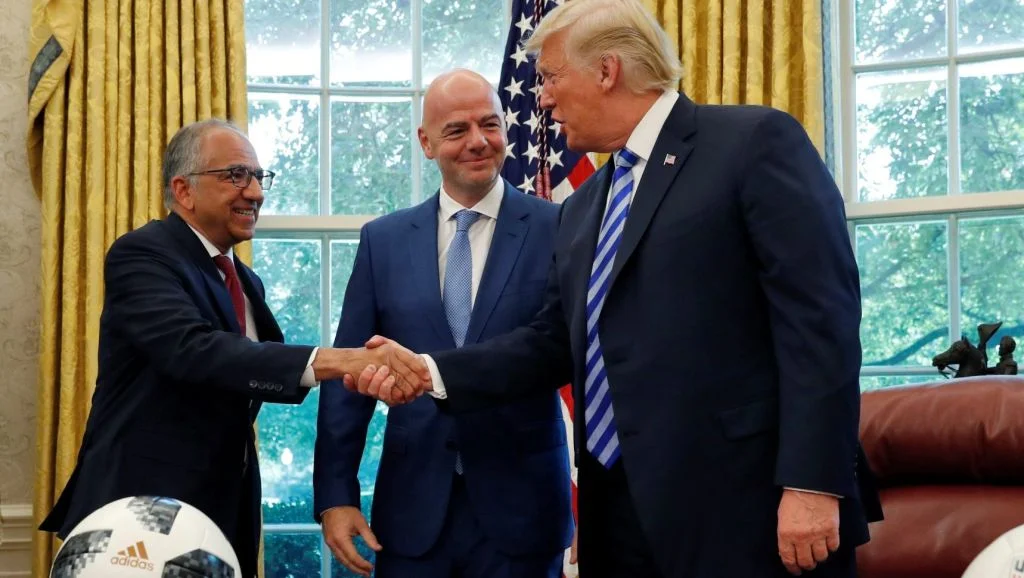
Gianni Infantino’s push to further commercialize the World Cup has encountered significant resistance, resulting in the resignation of two high-ranking FIFA officials and escalating scrutiny over the proposal. Infantino's strategic plan seeks to bring in private investors into FIFA’s lucrative business model, a move described by critics as self-serving and damaging to the sport’s integrity.
On Friday, Carlos Cordeiro, a former Goldman Sachs banker and Infantino's senior adviser, announced his resignation with a strikingly critical statement. Cordeiro, who previously served as president of U.S. Soccer from 2018 to 2020, articulated his discontent with Infantino's initiative, asserting that he had “no involvement” in shaping the proposal. “I oppose it unequivocally,” he emphasized, calling the deal detrimental both to national soccer federations and the future of the sport itself. He argued that FIFA’s focus should not be solely on maximizing commercial returns at the expense of its foundational responsibilities.
Joining Cordeiro's dissent was FIFA COO Kevin Lamour, who opted to remain in his position but openly criticized Infantino’s decision-making process. Lamour lamented the lack of transparency regarding the proposal, asserting that senior staff members had been “deceived.” His remarks point to a concerning atmosphere within FIFA, where internal dissent is met with intimidation. "It is the project of one person," Lamour stated, emphasizing the need for broader consultation and governance reform within the organization. His readiness to face possible dismissal for his candid opinion underscores the gravity of the situation.
As this internal conflict unfolds, Infantino was approaching his reelection campaign unopposed, but the environment is shifting rapidly. The backdrop to these resignations is the recent unveiling of FIFA Forward Enterprise (FFE), a $20 billion commercial project designed to handle various aspects of FIFA’s financial operations, such as media rights and sponsorship. Central to this initiative is Infantino's goal of securing $4.2 billion through the sale of a 20% stake to outside investors, with Joshua Kushner positioned as a prominent potential investor.
Critically, this influx of cash would theoretically enable national federations to boost funding per World Cup cycle from $10 million to $40 million. However, Cordeiro questioned the necessity of such funding, particularly given FIFA's access to substantial financial resources without accruing any debt. “Selling a permanent stake in football’s most valuable asset to raise $4.2 billion makes little sense,” he argued, pointing to the ample capital already available to support federations.
Amidst these tensions, both UEFA and the CONCACAF federation have publicly rejected the proposal, with UEFA threatening to boycott any future FIFA tournaments if the sale moves forward. Their considerable influence represents 90 of FIFA’s member federations, signaling that Infantino could struggle to garner the necessary 106 votes to pass the proposal among a total of 211. The increasing pushback reflects deep dissatisfaction with Infantino's leadership, particularly as the plan's ramifications become clearer.
Late Thursday, FIFA attempted to quell the growing backlash by issuing a press release aimed at clarifying aspects of the FFE plan and attributing some confusion to “incorrect media reports.” Yet, these efforts have been met with skepticism, as the Asian Football Confederation (AFC) joined the chorus of dissenters, expressing serious concerns over governance issues tied to the proposed initiative. The AFC’s statement highlighted ongoing frustrations regarding communication and consultation, stressing that the integrity of the sport cannot be compromised for financial gain.
Prime Minister of the U.K., Andy Burnham, also weighed in on the controversy, declaring that the FFE proposal demonstrates that Infantino is “the wrong man” to lead FIFA. This statement reflects a growing consensus among critics who argue that Infantino's vision prioritizes immediate financial returns over the long-term health of football governing structures.
If the AFC's 46 member associations decide to align in rejecting the FFE plan, Infantino’s initiative would likely falter, compelling FIFA to reassess its direction. The current landscape of international football governance has sparked a dialogue about ethical practices, stakeholder engagement, and transparency. As discussions unfold, many are watching closely to see if Infantino can navigate this internal turbulence or if it signals a pivotal shift in soccer's future leadership.
In this moment of uncertainty, the implications for FIFA's governing practices and the World Cup’s commercialization are profound, potentially reshaping the soccer landscape for years to come.
The post Infantino Loses Key FIFA Officials in Drive to Sell World Cup Stake appeared first on Front Office Sports.


